After signing all the required paperwork and meeting with our real estate agent one last time for the keys to the house, we finally opened the door as home owners. Knowing exactly what was first on our agenda, we grabbed a few knives and got to work on the hideous carpet that covered every square inch of the bedrooms and living room.
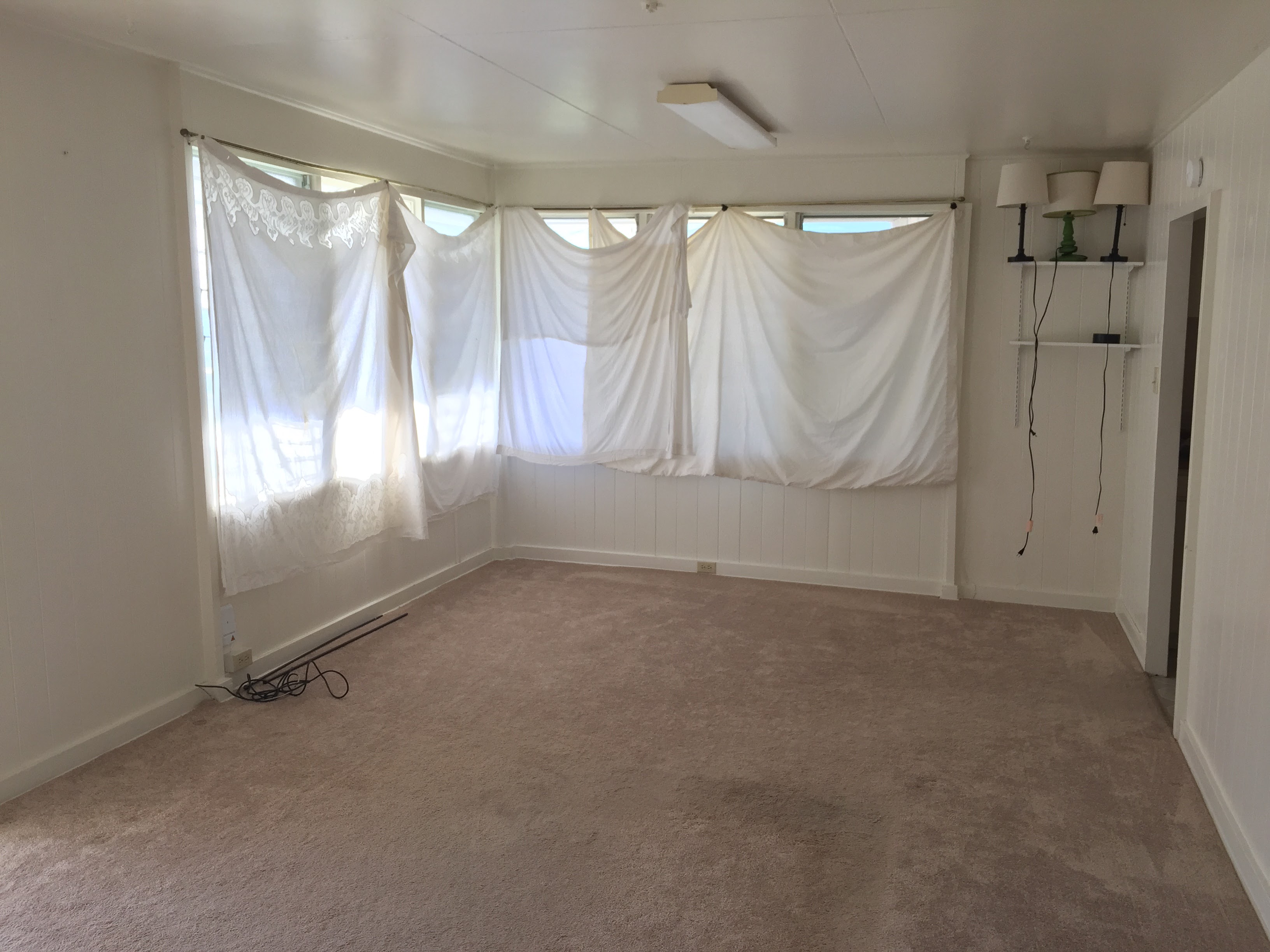
Back tracking a few weeks, during the first open house the carpet was the first thing we noticed but had to get a peek at what was underneath. Pulling up a corner in the master bedroom, it was reassuring to see long strips of deep brown douglas fir subflooring. Definitely weathered and in need of stripping, we spent that first night with the house tearing out all the carpet and padding from the nails holding it to the flooring.
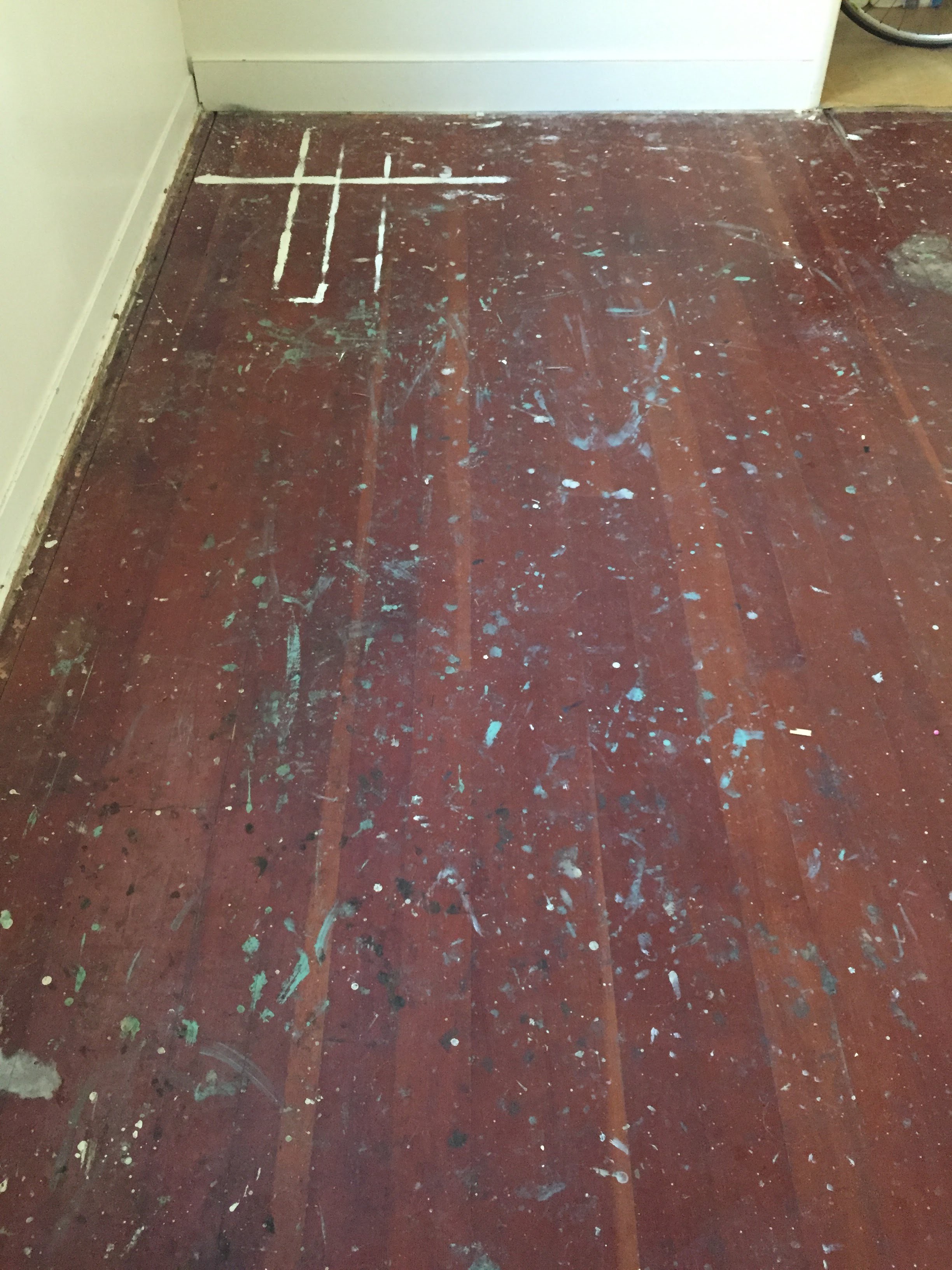
After pulling and tossing all the scrap carpet, the next step was removing each piece of tack striping, a long piece of poplar with a handful of large nails holding it to the subfloor, and hundreds of little nails sticking up where it once held the carpet. With the proper tools (rip claw hammers and pry bars) in hand, we got to work tediously pulling out each tack strip, being sure to keep the integrity of the subfloor in mind as we were unsure of the extent of termite damage.
At this point, the logistics and one of the many realities of homeownership kicked in. Since we were finishing up the lease on our rental, everything had to be moved to the new house, which mean’t a few nights of sleeping in the living room with every owned possession either under the house, outside, or in the kitchen while we could start sanding the rooms.
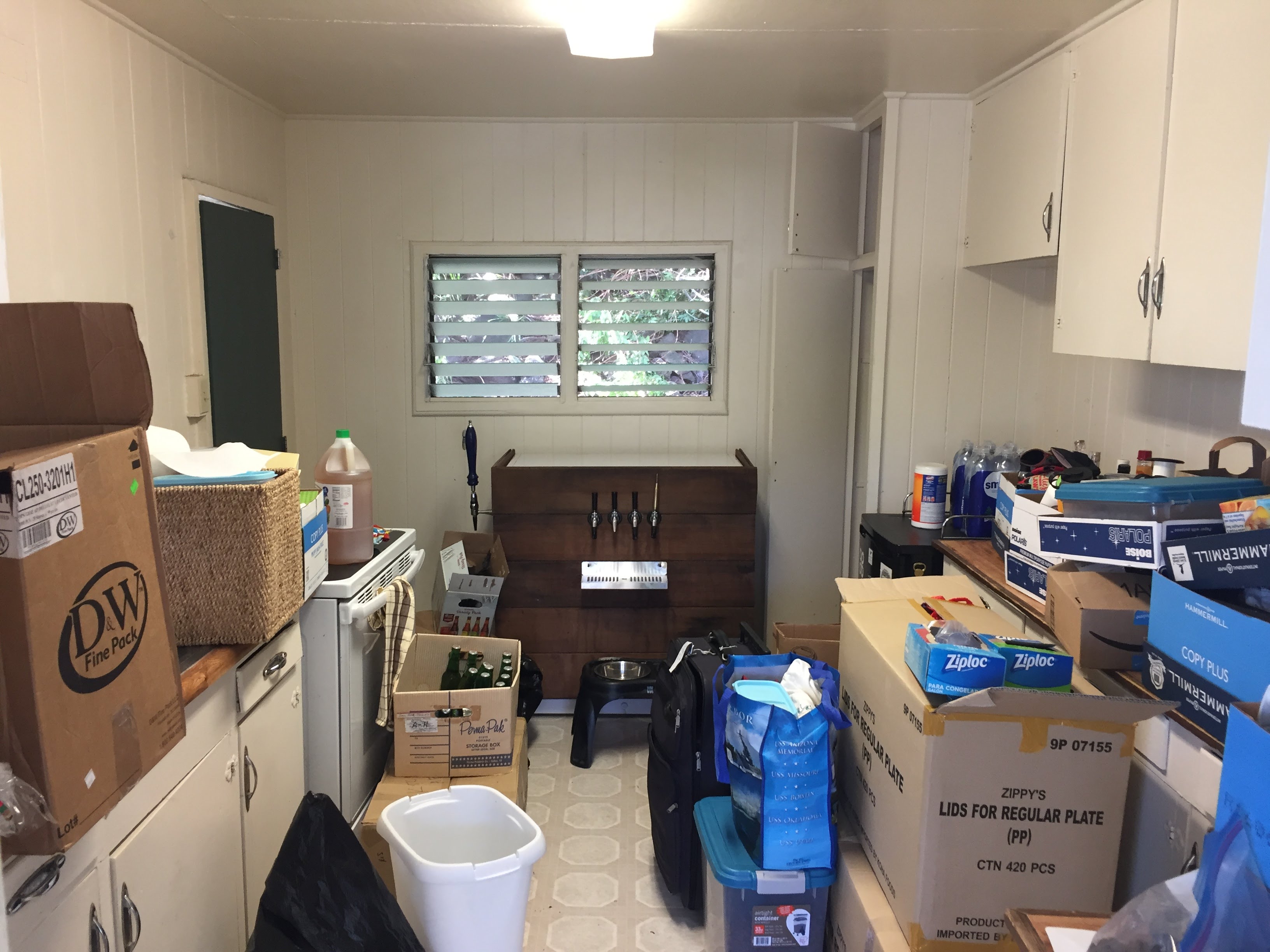
With carpet, padding and tack strips removed, we headed off to the Home Depot rental center for a drum floor sander to pull off the top layer of wood, exposing the beautiful, and original doug fir. Starting with low 40 grit sandpaper and working up to 60, we finished with 100. On the edges and corners where the drum sander could not reach, we practiced the same sanding pattern with our random orbital hand sander. Word to the wise, when working with a drum sander, be sure to practice in an inconspicuous area like a closet, because unlike a random orbital, if you leave it for any more than a second without moving, it creates a drum burn or divot on the flooring which is pretty tough to remove.
Now with the rooms fully sanded, it was time to prep for wood filling, staining and sealing. Due to a good amount of termite tracks along the floors, we went with a darker stain since the wood filler didn’t completely match the original wood. Much like painting where 90% of the job is the taping and prep work, the sanding and filling is definitely where you want to take your time. Once we popped the lid to Minwax’s Red Oak 215 oil based stain, gave it a stir and applied with terry cloth and stain applicators, it went extremely fast. Following the manufacturers instructions, we applied one coat allowing to dry for six hours before cleaning up with mineral spirits. Giving it another 24 hours or so, we sealed it with two coats of Varathane Clear Satin water based Polyurethane.
After extensive research, we went with a water based sealer to give it a true satin look. Oil based finishes can leave more gloss to it, and since all of our floors are constantly exposed to direct sunlight, we didn’t want to take any chances for them catching too much glare.
Now with all three rooms finished, it was time to set drop cloths and apply furniture pads so we could move everything from the living room and kitchen to the rooms and finish the living room floor.
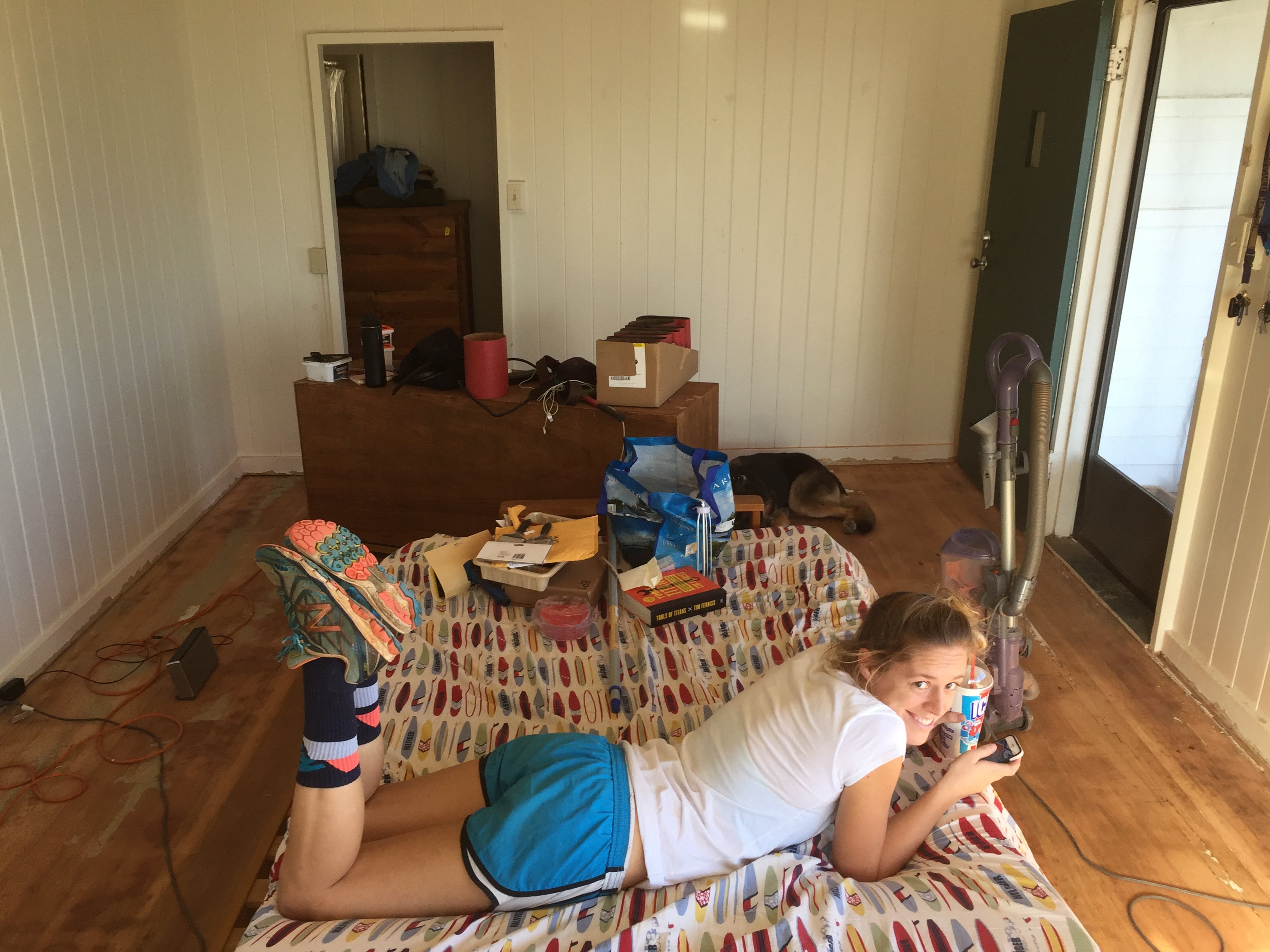
With all the filling, staining and sealing finished, it was finally time to get our lives back together! Otto definitely loved the cool temperature of the floors as you can see…
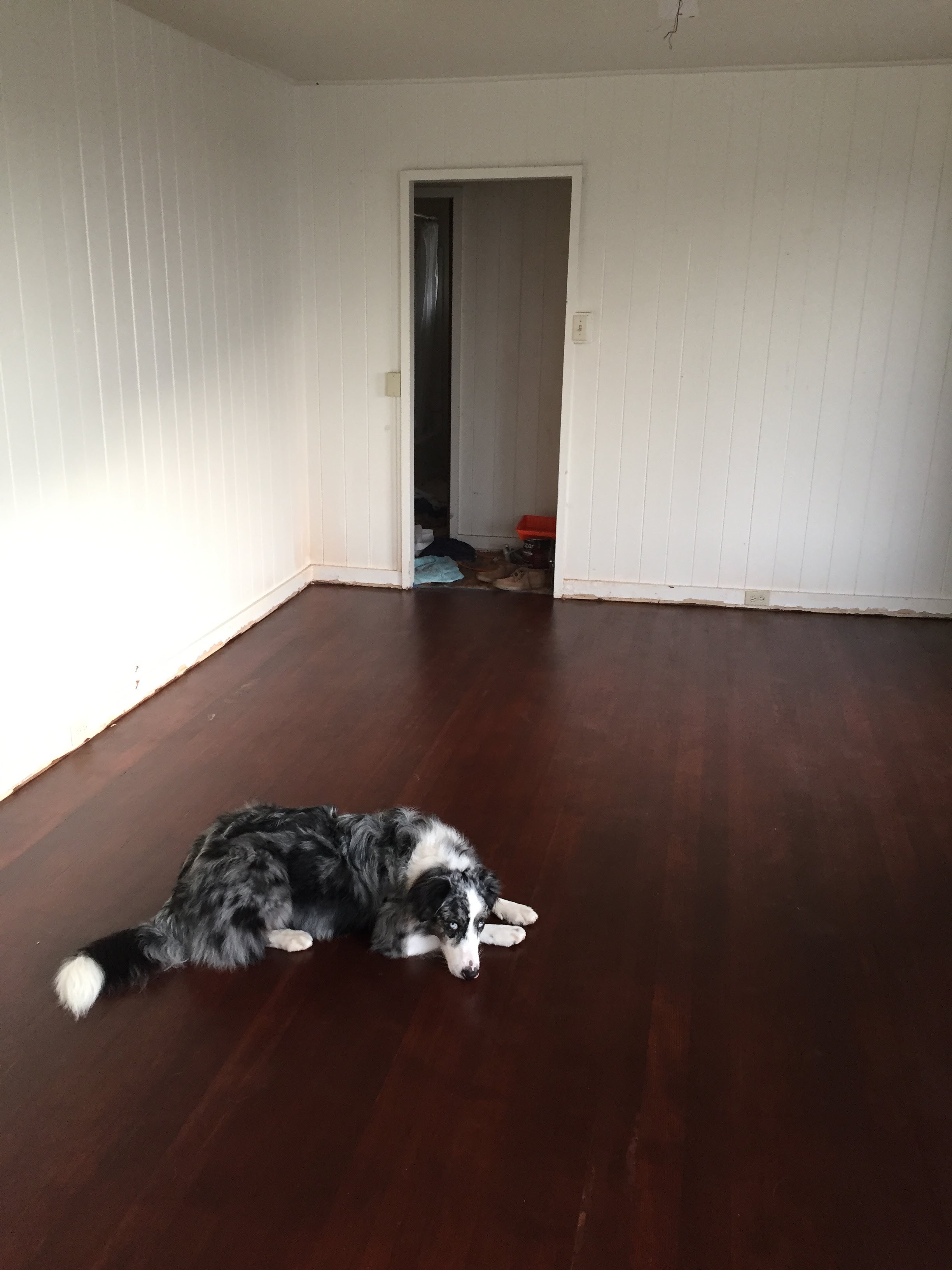
All in all, this inaugural project took about a week. Moving everything around was easily the worst part of it, but the end result is totally worth the pains and troubles. Because we live in a tropical climate and look for all the ventilation we can get, using the original subfloors has not been an issue for it being too “drafty” or anything.
What we’d do differently, if we were to do it again:
When the stain can says, “Shake well before use,” … Shake well before use. There was a slight difference in color among the rooms because of our failure to mix it completely. Shake it up!
It was a pain in the behind to have to move all of our things room by room when it came to sanding, then again for staining and sealing. Not impossible, but if this is a project that you can do while the house is vacant, it makes things much easier.
We’re happy to answer any questions you might have. Comment below!
 dePaula Marín
Leave a comment